Thursday, February 16, 2012

The Battle for the TLM: Conspiracy or Coincidence?


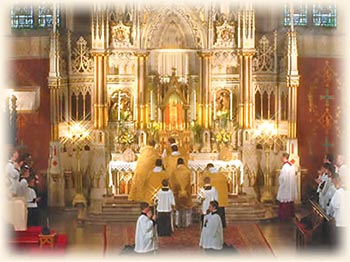
An on-going battle in the Diocese of Little Rock, Arkansas, is reminiscent of the battle we have been fighting (and have mostly lost – for now) in the Diocese of Baker. It’s the battle of the faithful to secure their right to have the extraordinary form of the Mass offered in their parishes. And in the end, it’s the battle for the truths of the Catholic Church to be taught to the faithful.
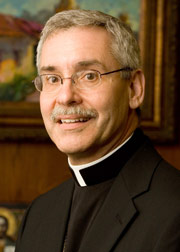
Bishop Taylor
In an article in The Remnant (December 2011), author  Ray Zürbeck pointed to numerous events in the Diocese – what he called “a long series of aggressive maneuvers” by Bishop Anthony Taylor – which had led to the demise of the Traditional Latin Mass in communities where it had been flourishing.  One FSSP priest was dismissed from the diocese on grounds of “child abuse” (not sexual, and investigated and dropped by the local Department of Human Services).  Another diocesan priest who had been saying the EF Mass regularly “was accused of some wrongdoing, and with no preliminary investigation he was removed from his position as pastor of St. Josephs in Fayetteville”. Zürbeck maintains that the priest was “quickly cleared, but to this date his faculties have not been restored”. And finally, a young priest (identified only as “Father X”) who had been trained in Rome, understood Summorum Pontificum, and started offering an EF Mass received this treatment:

…in late February 2010, Bishop Taylor personally escorted Father X to the St. Luke Institute in Silver Springs for “treatment” related to some supposed “personal problems.”  Every priest in the diocese knew exactly what those personal problems were – a desire to offer Mass in the Extraordinary Form.

Zürbeck summarizes the condition of the Diocese of Little Rock:

And so, here we are in the year 2011 Anno Domini, with Catholics in Arkansas still having to fight for their right to the Usus Antiquior as if they were back in the 1970’s.  Bishop Taylor has found a way to get around Summorum Pontificum: if a priest is caught praying in Latin, accuse him of some wrongdoing and broadcast it to the world.  It doesn’t have to be true or accurate. Don’t bother to investigate, just get it into the news media, destroy the man’s reputation, and move on to the next target.  It works!  Even for good priests like Fathers Bradley and Demets.  Or, better yet, send him to St. Luke’s for “treatment.”  I’m guessing that Bishop Taylor and his henchmen will continue to purge the diocese of one holy priest after another in this manner.  What is there to stop them?  It works!  At this point they are just a few steps away from accomplishing their mission, which seems to have everything to do with purifying the Diocese of Little Rock of Catholic Tradition.  Catholic Tradition stands in the way of ideological agendas, you see. 

Bishop Taylor has now responded to Zürbeck’s challenges in another Remnant article posted on February 13, 2012. He addresses many of the charges with lengthy explanations, and concludes:

In any event, my purpose here is not to defend myself point by point against the allegations of Mr. Zürbeck, but simply to indicate that there is no conspiracy in Arkansas against the Latin Mass and that there are in fact honorable reasons why I was forced to take each of the steps to which he ascribes such unworthy motives. I am responsible for protecting the flock entrusted to my care and for implementing the safe environment policies of the Church.

In a rebuttal following Bishop Taylor’s explanation, Zürbeck maintains that there are still some facts that need to be addressed:

·         One of the first things Bishop Taylor did when he arrived in Arkansas was to discontinue a newly-founded Latin Mass community in Berryville.  This was post Summorum Pontificum.

·         After leaving the people of Northwest Arkansas without a Latin Mass, Bishop Taylor publicly replied negatively to requests from the faithful that it be restored.  

·         Shortly after that, a young priest who began offering the Extraordinary Form of the Mass at odd hours during the week was admonished several times and then finally sent to St. Luke Institute.  Since his return he no longer offers Mass in the Extraordinary Form. 

And regarding the bishop’s assurances that there is “no conspiracy” against the EF Mass, Zürbeck writes:

Bishop Taylor states in his response:  “…. there are in fact honorable reasons why I was forced to take each of the steps to which he ascribes such unworthy motives.”  Why are traditional Catholics in Arkansas seeing a hidden motive, then?  Well, the answer is simple:  People find it odd that within the Diocese of Little Rock it seems that something weird happens to any diocesan priest who, on his own initiative, begins offering a Latin Mass.

So…how does all this relate to the Diocese of Baker? We saw a similar scenario – though on a smaller scale – develop when Bishop Robert F. Vasa was transferred to the Diocese of Santa Rosa over a year ago, and retired Bishop William S. Skylstad was assigned as the Apostolic Administrator of the diocese.

Like Bishop Taylor in Arkansas, Bishop Skylstad made swift changes in the diocese that led to the complete disruption of an established EF Mass here. I’ve documented those events here, here, and here. Oh yeah, and here and here, too.

Bishop Skylstad
In short, Bishop Skylstad spuriously restricted the faculties of the priest who had been saying the EF Mass for our stable group; he moved two other priests who were able to say the EF Mass to the farthest corners of the diocese; and he encouraged another priest who had begun to say the EF Mass to reduce the frequency of these Masses (though the bishop did not insist on this).  Bishop Skylstad also removed the tradition-sympathetic pastor of the parish where a monthly EF Mass had been held, and appointed instead a pastor who makes no secret of the fact that he “hates Latin” and has little sympathy for those “who try to shove Latin down our throats”.  It is unlikely that this priest will approve our use of the facilities for the EF Mass!

And Bishop Skylstad did all this while smiling to our faces and assuring us that he had nothing against the EF Mass – “in fact, we even have one of those in Spokane,” he noted.  
So, are all these little pieces of the puzzle just a coincidence? Come on. I took statistics in college. That's why I don't play the lottery.

I’ve been cautioned by a priest whom I respect that it is unwise to question a bishop’s motives for moving priests, and that there may be reasons for the changes of which the laity is not made aware. I agree that this is a possibility. Still, my thought is that bishops seem to be pretty darn good at coming up with reasons that sound “pastoral”, all the while using these “pastoral” decisions to further an agenda against the EF Mass.

And I have no doubt that some bishops do have such an agenda. Until I start seeing diocesan websites that maintain a list of EF Masses available in their domain, and a training program for priests to learn the EF Mass, or at least some show of support for and promotion of the EF Mass, I will continue to doubt that there is widespread acceptance of and conformity to Summorum Pontificum. It ain’t happenin’ in Eastern Oregon, I can tell you that!

It’s beyond credibility that the pattern of events taking place in dioceses all over this country is just a series of unhappy coincidences. I don’t necessarily believe that there is a conscious, carefully-planned, cross-diocese conspiracy to keep the EF Mass under wraps, but…wait…could there be?!...Well, anyway, at the very least, there seems to be a certain mindset amongst some of the bishops which is preventing it from flourishing. And perhaps the bishops learn from each other the little techniques they can use to squelch the EF Mass without admitting that that is what they are doing.

For instance:

·         It is well-known that seminarians – at least in certain diocese and geographic areas – must keep any “traditionalist” tendencies they may have “under the radar” for fear of being dismissed on grounds of being “too rigid” or “not pastoral”. (This has been a national problem for decades, and includes the whole issue of homosexuality in the priesthood, as well; see Michael S. Rose’s Good-by, Good Men.)

Fr. Michael Rodriguez
·         Priest like Fr. Michael Rodriguez (El Paso, Texas) have been removed from their parishes and banished to the hinterlands, apparently for no better reason than that they were speaking the truth and/or offering the EF Mass. Fr. Rodriguez is not the only one, as Zürbeck’s story and my own experiences have shown. I’ve heard similar stories now in Texas, Arkansas, Oregon, and Idaho…and that’s without even looking for the problems.

·         Even the laity comes under attack by bishops and/or diocesan “officials” for speaking the truth – Michael Voris and RealCatholicTV, for example. There was also Daniel Avila, who dared to suggest that Satan might be involved in homosexuality, and lost his job as a result.

So we have hushing, shushing, and shuffling of priests and laity who take being Catholic quite seriously, who hold to Tradition, and who take care to preach and teach the Truth.

And all the while, “catholics” like Nancy Pelosi, Kathleen Sebelius, Joe Biden, Sr. Carol Keehan are allowed to continue to spread their heretical and scandalous thoughts to the detriment of the Church and the souls under Her care, with barely a word of correction or condemnation of their false teaching.

Go figure.

If it’s not a conspiracy of men, it is certainly a conspiracy of Satan and his minions.


Wednesday, February 15, 2012

Altar BOYS: There's a Good Reason for That


I received the following wonderful news in an email the other day:

After Mass yesterday, Father asked for a few moments of our time. He announced that one of the young men who serve during the Mass is entering the seminary next week.

The young man then gave a brief talk. He had discovered the Latin Mass about 5 years ago and started attending. Father is very good at spotting new faces in the crowd, and after a few Masses, he suggested to the young man that if he wanted a greater understanding of Our Lord, then he might consider serving at the altar.

The young man thought about it, then agreed. He was given some instruction, and was allowed to serve during the Low Mass. Eventually he served at the High Mass.

He didn't know Latin when he began, but as we know, it's something that grows on you. :)

The young man acknowledged the influence that serving has had on his decision to answer the Call. It was the proximity to God, among other things. The young man also called for other boys and men in the community to step up. He said that it's a privilege available to all baptized Catholic men, and one that should be taken advantage of. 

Interestingly, on the same day, I received another email from a different friend alerting me to an article in the 2/9 on-line edition of The Wanderer: “The Anomaly of ‘Altar Girls’”, by Fr. Brian W. Harrison, OS. The article is well worth reading in its entirety. I point here to a few paragraphs which mesh nicely with the story related above. First, Fr. Harrison points out the lack of precedent for female altar servers (all emphases mine):

It must be said in the first place that the absolute novelty of female altar service practice is in itself troubling. For when a given liturgical custom has not only existed, but has been continuously and emphatically reaffirmed and insisted upon since the patristic era, there must be a presumption that such a custom is very probably Apostolic in origin, reflecting the will — a marked preference or even a requirement — of Christ Himself.

In the Vatican journal Notitiæ ( Vol. 16, 1980), the liturgical scholar Aimé-Georges Martimort … goes on to quote Pope St. Gelasius in 494, who wrote to the bishops of Sicily and southern Italy: “We have heard with sorrow of the great contempt with which the sacred mysteries have been treated. It has reached the point where women have been encouraged to serve at the altar, and to carry out roles that are not suited to their sex, having been assigned exclusively to those of masculine gender.”

Every edition of the Roman Missal from 1570 till 1962 carried the prohibition of female altar service, as did the 1917 Code of Canon Law (c. 813, §2), not to mention the earlier documents of the postconciliar liturgical reform itself. 

But if the emphatic and uninterrupted tradition of the Church reserved the sanctuary, and especially the altar itself, for ministers of the male sex, what was the main reason for this? Many have noted that the admission of “altar girls” often has the effect of discouraging young boys from a service no longer seen as masculine in character, so that a fruitful source of future priestly vocations is thereby placed at risk. It has also been pointed out that a further obstacle is posed by this innovation to reunion with the Eastern Orthodox, who roundly reject it.

But such objections do not get to the heart of the matter, which is pinpointed by Martimort as “. . . the link which was understood to unite the lesser ministries to the priesthood itself, to the point where they had become the normal stages leading to the priesthood. This link is already present in the perspective of St. Cyprian [d. 258].”

Thus, the Church’s unwillingness from time immemorial to have females acting at the altar has clearly been linked to the fact that altar service is closely related to the ministerial priesthood, which, as John Paul II reaffirmed definitively in Ordinatio Sacerdotalis, can never possibly be conferred upon women.

Fr. Harrison also discusses his opinion that it is not objectionable to have females serve as readers or extraordinary ministers of Holy Communion. He points out the fallacy of an “all or nothing” scenario – the notion that females must be given either unrestricted access to liturgical service, or none at all. The important factor is whether the ministry is seen as leading to the priesthood. He notes:

There are precedents dating back to the patristic era for the reading of the Epistle (sometimes even the Gospel), and for the administration of Communion under extraordinary circumstances, to be carried out by persons not seen as in any way as being on the road to the priesthood. Altar service, on the other hand, has always traditionally been envisaged as something strictly reserved for those with the potential to become priests; and precisely for that reason it has been permitted to young boys as well as more mature males.
The server is presented visually and symbolically in that role by his male, clerical dress (cassock and surplice), by his location at the altar, and by his actions, which provide proximate assistance and preparation for the quintessentially priestly act: the offering of the Eucharistic Sacrifice.

But in recent years the Latin-Rite Church, by inviting females to serve at the place of priestly sacrifice dressed in the sacerdotal garb of alb or cassock, seems to be speaking with a forked tongue. At the level of her purely verbal communication the Church promulgates documents excluding women’s ordination irrevocably; but in her “body language” during the Eucharist — her most sacred liturgical action — she is now insinuating the exact opposite. The presence of female servers at the altar is a silent but eloquent challenge to the Church’s infallible teaching that women can never be priests.

I think the story at the beginning of this post of the young man who has answered the call to the priesthood due largely to his service at the altar aptly illustrates the significance of Fr. Harrison’s historical analysis. Serving at the altar is an important “stepping stone” toward the priesthood.

Fr. Harrsion also points out that:

…the Congregation for Divine Worship ruled in 2001 that no bishop may require any of his priests to celebrate with female servers. Male only altar service is described as a “noble tradition” which is “always very appropriate.”

… Female altar service is a novelty that clearly will not be rolled back overnight; so at this early stage, the best scenario would be one in which an increasing number of priests — and, hopefully, bishops — show themselves willing to face down the predictable opposition and lead by personal example, returning to the practice of celebrating with male servers only. And they will be greatly assisted in doing that if increasing numbers of lay Catholics (of both sexes) openly support and encourage them in this initiative.

Perhaps it wouldn’t hurt to just make a friendly comment to your own parish priest in this regard; simply making a positive comment about the presence of male altar servers (if there are any!), rather than a negative one about female altar servers, could make the point in a non-abrasive way. Priests who know they can count on some support will certainly be more likely to make the change.

Let us pray for a return to the traditions the Church has held for hundreds of years!


ADDENDUM:


Here is a comment received via email which notes some important details: 


In response to a dubium submitted by a bishop to the Congregation for Divine Worship and the Discipline of the Sacraments on whether a bishop had the authority to compel his priests to employ the use of females to serve at the altar, the then-Prefect, Cardinal Medina Estevez replied in 2001 in the negative. In explaining this, he concluded: "Therefore, in the event that Your Excellency found it opportune to authorize service of women at the altar, it would remain important to explain clearly to the faithful the nature of this innovation, lest confusion might be introduced, thereby hampering the development of priestly vocations." (July 27, 2001; Prot. 2451/00/L, emphasis added)


In doing so he was merely restating the provisions of the 1994 Circular Letter to the Presidents of the Episcopal Conferences on this issue, in which it was decreed:


1) Canon 230 #2 has a permissive and not a preceptive character: Laici . . . possunt. Hence the permission given in this regard by some Bishops can in no way be considered as binding on other Bishops. In fact, it is the competence of each Bishop, in his diocese, after hearing the opinion of the Episcopal Conference, to make a prudential judgment on what to do, with a view to the ordered development of liturgical life in his own diocese.

2) The Holy See respects the decision adopted by certain Bishops for specific local reasons on the basis of the provisions of Canon 230 2. At the same time, however, the Holy See wishes to recall that it will always be very appropriate to follow the noble tradition of having boys serve at the altar. As is well known, this has led to a reassuring development of priestly vocations. Thus the obligation to support such groups of altar boys will always continue.

3) If in some diocese, on the basis of Canon 230 #2, the Bishop permits that, for particular reasons, women may also serve at the altar, this decision must be clearly explained to the faithful, in the light of the above-mentioned norm. It shall also be made clear that the norm is already being widely applied, by the fact that women frequently serve as lectors in the Liturgy and can also be called upon to distribute Holy Communion as Extraordinary Ministers of the Eucharist and to carry out other functions, according to the provisions of the same Canon 230 #3.

4) It must also be clearly understood that the liturgical services mentioned above are carried out by lay people ex temporanea deputatione, according to the judgment of the Bishop, without lay people, be they men or women, having any right to exercise them.

The two requirements for employing the use of women and girls to serve at the altar - a) that it be done only for specific reasons ["equal opportunity" is not a valid reason] and b) that the decision be clearly explained to the faithful – have, to quote Hamlet,  been "more honour'd in the breach than the observance." (Act 1, Scene 4) In my experience, I know of not a single bishop who has fulfilled these requirements in permitting the use of female altar servers.

Secondly, to the specific situation in the Diocese of Baker: in the eighteen years since the publication of this Circular Letter, our Diocese has seen only two native sons ordained to the priesthood for the Diocese (there is, possibly, a third, but I am not certain as to whether he fits into that time frame). While our Diocese has never known an abundance of vocations to the priesthood, it would seem that there is some correlation between the introduction of the use of female altar servers in our Diocese and the near catastrophic decline in native vocations since that date.


My Mom

My mom died 20 years ago today. She was my best friend.

I wasn’t Catholic when she died, but just prior to her diagnosis of cancer, I had returned to God by way of a Pentecostal friend, and considered myself a “born again Christian”.  I’d been baptized in the Episcopal Church as an infant, and we had attended that church till I was about 8 years old. After that, my dad had “issues” with the church, and we stopped attending. Lacking any religious upbringing after that point, I considered myself non-religious, and in my young adulthood even tried to deny the existence of God (it just didn't work!).

My mom with my two sisters and me.
That's me on the right.
There is no doubt in my mind that God called me back to Him when He did because He knew I would need His help to get me through my mom’s illness and death.

We had a memorial service for my mom. I had spent the last days of her life composing a eulogy for the occasion, and I managed to deliver it without dissolving into tears, which had been my fear. I have saved the print version of that talk all these years…it’s on video, too, along with the rest of the service.

Every few years I take a look at the talk, and sometimes I share it with someone in honor of the anniversary of my mom’s death. I’m doing that on this blog this year – along with some commentary from the present.

Here's how I started:

The message I want to share with you today has to do with a question probably each of us has asked over the last few months.  When someone like my mother gets caner and dies, the inevitable question is “WHY?!”  Why do bad things happen to good people?

So I want to address that question – because Mom was a good person, and something bad did happen to her. And I think we all need to come to terms with that.

That was then. My theology was pretty simplistic back then, and people did think of my mom as a “good person”.  But this is now. These days, I think more about our sinful fallen nature. 

Let’s start with the part about being a good person.  I don’t think anyone here would deny that Ruth Collins was a good person…Her attitude was always positive, and she usually knew how to treat people right (well, of course you didn’t want to get on her bad side! I felt sorry for the individual who parked in her “employee of the month” spot).  You know, after lying bed-ridden for weeks and lacking the strength to sit up in bed, she still had a smile for everyone who came to see her.  Mom was just in the habit of making people feel good.

I talked a bit about Mom’s sense of humor, and related this story:

I think I witnessed the ultimate in her sense of humor and positive attitude the day after Thanksgiving when I took her to see her doctor at the hospital. That was the worst day of my life because he told us together that she was going to die.  He was gentle but straightforward, saying things like “We don’t know how much time you have” and “She’s not going to be with us much longer.” 

I was in tears, but Mom was stoic.  Picture her sitting in her pajamas, looking thin, pale, tired, and very, very sick.  The doctor has just told her she’s going to die.  Mom kept a straight face and said to the doctor, “You know, Doctor, I think there’s been a mistake all along here.  I’ve been having this craving for root beer, and I think I’m just pregnant.”

To be honest, I was actually slightly appalled that she said this, though I was accustomed to her occasional wackiness, and I looked at the doctor to see how he would react. He was from India, as I recall, so there was a bit of a language barrier at times, and I didn’t know whether he would get the joke. Would he think she had just lost her mind? To his credit, he laughed.

Now we don’t have to pretend she was a saint. Like I said, you didn’t want to get on her bad side… I know she yelled at people now and then – especially her daughters!  And she had a few complaints about her job over the years.  But nevertheless, she was good.  So back to the question…why did this bad thing happen to her?

Ha! You see the seeds of my Catholicism there! She wasn’t a saint, and even back before I was Catholic, I didn’t want to have a canonization ceremony for my mom! I was still sort of stuck on the “good” part, though.

The next part took some people by surprise, I think. I had thought long and hard about it, and didn’t really want to do it, but I felt very strongly that I needed to do my part to help people understand that there is an eternal life (or death) ahead of us. So I continued:

I have some things to say about this for those of you who believe in God and some things to say to those of you who do not believe.  I even have something to say to those of you who aren’t sure.  In fact, I’ll start with the unsure ones.  If you are sitting on the fence in terms of your religious convictions, you should know that the Bible says if you can’t decide one way or the other, you make God throw up.  Actually, I’m paraphrasing Revelation 3:16: “Because you are lukewarm – neither hot nor cold – I am about to spit you out of my mouth.”  So take a stand!

For those of you who believe in Scripture, let me paraphrase and quote a few verses.  First of all, God never promised us a rose garden.  Okay, he did give us the Garden of Eden, but we blew it.  In fact, I think most of us would be bored in paradise. There’s a story about a guy who dies and finds himself in a place where everything is perfect; he gets whatever he wants just by wishing for it.  But he gets tired of that, and he goes to the head guy and says, “I’m tired of heaven.  I want to get out of here.”  And the head guy says, “This isn’t heaven.” 

So God didn’t promise that if we live a good life we will never have any sickness or tragedy.  He did promise, however, that he will help us through the bad times.  The Bible is full of those promises.

You can see also that I was a “Bible Christian”. I knew nothing of Catholic tradition, nor the Fathers of the Church. I went on to read a number of Scripture verses which I characterized as promises “that God will help us through the bad times”.

And then I got pretty darn Catholic.  Or not…if the Catholic funerals I’ve been to are any indication of Catholicity! I have generally stopped going to funerals because of the tendency to beatify or canonize the deceased, and because of the failure to acknowledge that there could have been some salvific value in suffering...let alone any mention of purgatory or hell.

I think it’s also important to remember that we never have all the facts regarding another person’s suffering – or even our own.  Suffering can be used for a higher good, but we may not always know what that good is.  For those of you who believe in Scripture, remember that it can be a joy to suffer.  The Lord won’t give you anything you and he can’t handle together.  If the Lord tests your strength by allowing you to suffer, consider it a blessing. As it says in Romans 5:3, “we also rejoice in our sufferings, because we know that suffering produces perseverance; perseverance, character; and character, hope.”

None of us can ever know what good may have come to Mom because of her suffering – though she did learn how much you all cared, and that was a blessing for her.  Robert Schuller says that instead of asking why bad things happen to good people, we should ask what happens to good people when bad things happen.  Maybe the good that was to come from Mom’s suffering was not for her, but for some of us around her.  I can tell you from my own experience that a lot of good came to me through my participation in her situation. It’s been a time of introspection and personal growth for me, not to mention the fact that I had the benefit of becoming friends with a number of you whom I would not have met otherwise.  I’m not happy about what happened.  But it helps to look for the good.

One benefit I didn’t mention at that time was that in the hours I spent simply sitting in Mom’s house watching her deteriorate, I read the Bible. A lot. It was the NIV Bible, and the commentary in that version doesn’t always reflect Catholic teaching, but it was a boon to become more familiar with the Word of God.

I think for all of us, it’s been an uplifting experience to watch a person like my mother hold on to her dignity and her sense of humor, and never really complain, through a very difficult time.  She is an example for all of us to follow.  As I watched her continue to smile and compliment others in some small way, even when she was desperately weak, I realized how easy it is to make someone else’s life a little more pleasant.  If Mom could do it on her death bed, how much more can we do it, as healthy human beings?  If we all endeavor to do that, the world will be a better place.

Now…for those of you who don’t believe in God or Scripture, let me say this: It might be tempting to use my mother’s death as an excuse to say, “If there was a God, why would he let this happen to her?”  In fact, Mom asked me that question herself one day during her first bout of radiation treatment.

My mom had lung cancer. She had smoked cigarettes most of her life, quitting only when my dad died. She quit “cold turkey” and never went back to it. And like many who quit smoking, she became relentless in her exhortations to her friends to quit smoking. When, 20 years later, she developed lung cancer, she thought it a most egregious injustice. She said to her radiation doctor, “My friends ask me why they should quit smoking; I quit but I still got cancer.” The doctor said told her to tell them that if they quit smoking they might get cancer or they might not; but if they didn’t quit, they would almost certainly develop - and die from - emphysema.

But...can we blame God, or his absence, for cancer? After all, how many of you are smokers?  How many of you smokers know that it’s bad for you?  How many of you will quit smoking because you know it’s bad for you, and because you saw what it did to Mom?  God has certainly not hidden the facts from you; it’s clear that smoking can lead to cancer.  But neither has God taken away your free will.  The information is there, and if you are not acting on that information, don’t blame God for cancer.  The fact that there is disease in the world does not prove that God does not exist.

Besides, I can tell you from my own experience that the bad things that happen to good people are much easier to handle if you have faith in a greater mind that has a plan, if you have faith that those bad things are happening for a good reason.

When Mom said to me, “If there is a God, why would he do this to me?” I could only answer, “Mom, I guess that’s where faith comes in.”  Hebrews 11:1 says, “Faith is being sure of what we hope for, and certain of what we do not see.”  Yes, believing in God is a leap of faith.  On the other hand, if there were undeniable proof of God’s existence, then it would be easy to believe, and thus would be meaningless.  Nothing of value ever comes easily.  So if you think it is easy to believe in God, you are wrong.  Having faith takes hard work.  I challenge you to give it a try.  Mom did – at the end.  In the early morning hours on Wednesday, February 12, I asked her if she believed in God, and she gave me several emphatic “uh-huh’s” – which was about as much as she was able to speak at that time.

Besides, on something of a lighter note, I hope you’ll all consider the fact that you’re going to be dead a whole lot longer than you’re going to be alive, and you should really think about making some long range plans in that regard.

I am sad that Mom died.  That’s an understatement of course.  But the day the doctor told her she was not going to get better, she told me not to cry.  “Everybody has to go sometime,” she said.  And of course she’s right.

How many of you want to go to heaven?  How many are willing to die to get there?  Willing or not, we do all have to go sometime, and I hope you’ll all have at least a few words with God about the final arrangements.

Some of you may think it’s inappropriate for me to exhort you to believe in God and to quit smoking at a ceremony designated for the memory of a woman we all knew and loved. But I don’t think Mom would take offense.  She certainly felt the necessity for faith in God at the end of her life, and she certainly wanted all of you smokers to quit!

I know I would write a different eulogy today. That’s okay; this piece of my past helps me remember how far I have come, and how far I have to go.

My memories of my mom are still strong. Sometimes I can hear her voice in the things I say to my daughter. She influenced me tremendously in practically every aspect of my life. I counted on her help and support, and she was always there for me. Now I depend on Our Blessed Mother for that - and more! And somehow, my earthly mom is wrapped up in that devotion to Mary.

I suspect they are both pleased about that.


Tuesday, February 14, 2012

Vortex: Purification of the Church Needed ASAP


I’m happy to let Michael Voris do the talking today...but you'll have to go here to listen/watch today's Vortex episode. 

Here are some a lot of excerpts from the script for those who would rather read than listen. But I haven't reproduced the whole script here, and it is well worth watching the entire 6-minute video (as well as subscribing).

  
[My emphases]

…Look at these numbers from the Public Religion Research Institute. A majority of Catholics – get this – actually SUPPORT Obama on this one over and above the bishops. In fact, the percentage of support among Catholics for Obama’s free birth control for everybody plan is actually greater than among the general population of Americans…Obama has tested the waters and found that the support for the bishops among the overall Catholic population really is as weak as everyone has long suspected. 

What a dilemma for the US bishops. After squandering their moral authority for the past 40 plus years by lying in bed with the party of death they are now paying the price. It was any – most in fact – of the bishops themselves who have stayed deathly silent on the issue of contraception, so much so that it is nearly impossible to turn up one single document or letter or press release from the National Headquarters where that is the main topic…

… What we see unfolding before us is the consequence of 40 plus years of naïveté and political alliance with Caesar on the part of the American hierarchy.

…A couple of months ago, [the bishops] re-released the pathetic document Faithful Citizenship – a document that thankfully almost no Catholics know about or pay attention to if they do. In it, the garble of language and ambiguous competing principles essentially says nothing and claims nothing as being an absolute disqualifier for holding public office.

Killing Children in the womb and supporting laws that allow this barbarism IS a
disqualifier – automatically and undeniably. Yet nowhere is this clearly stated in the document. Practically all Democrats in office support this murder and yet nothing is really said about them... much less DONE about them.

The National Bishops’ office publishes watered down ambiguous pamphlets about voting for who your conscience says you should vote for, but never gets down to the nuts and bolts about how a good conscience should be formed.

Here’s what needs to happen and the example is Blessed Pope John Paul II Himself. An apology: a great big nationally televised, much publicized apology. 

Hell itself has been allowed to run rampant in the Church for the past half century. The bishops who have been complicit in this through their silence need to stand up and

1.       ADMIT their complicity.
2.      CONFESS, for all the Catholic world to hear, that they have been wrong in not exercising their authority in charity as strong men do.
3.      They need to publically ACKNOWLEDGE the grave disaster that they have allowed to be rained down on the Church – down to the loss of hundreds of millions of souls from the Faith... AND IT IS hundreds of millions of souls over all these years.
4.      And when all of this has been publically confessed, they must set about to make AMENDS in very tangible practical ways. Dissident theologians must be summarily fired. Catholic institutions that operate in the name of the Church yet defy Her infallible teachings must finally be cast off once and for all. Chanceries must be cleared of professional Catholics. Priests and religious that do not live moral faithful lives must be brushed aside.

In short, a purification of the Church must begin and begin in earnest.

Monday, February 13, 2012

Nothing Compares with the TLM


My husband and I went to an NO Mass last Saturday evening; with the extraordinary form (TLM) not available to us, we were forced once again to choose the least offensive Mass we could find in our area. (See Why I Dread Sunday Mass)

The previous Sunday (February 5), we were able to attend an EF Mass. Aaaahhh. It was good. But having to attend an NO Mass this past week brought the contrast all too sharply into focus.

I’m reading a book recommended to me by a friend: The Desolate City: Revolution in the Catholic Church, by Anne Roche Muggeridge (RIP), published originally in 1986.  One review of the book (here) suggests that the author’s main thesis is “that an anti-Catholic revolution has taken place in the Church and that since 1968 various local and national sectors of the Church have fallen de facto into the hands of revolutionaries”.  (There’s another summary and review here.)

Sadly, Muggeridge’s commentary on the state of the Church is as true today (if not more so) than it was 25 years ago. And she speaks my mind exactly in some places. For instance, in mentioning that there was one priest who managed to say the NO Mass in a reverent and orthodox way, she still concludes that (my emphases throughout):

Thankful as one is for a decent place to go to Mass, this situation is destructive not only because of its necessary impermanence, but also because it has led to a revival of Donatism, whereby one finds oneself sitting out Holy Communion if one has doubts about the validity of the Mass in progress, and judging the validity of the Mass by the way the priest says it. This is dreadful. One is forced to fall back upon Catholic legislation worked out long ago to deal with situation like this, though it seems to lead in a circle. The Mass is valid if said according to the mind of the Church. But how does one know if the priest is actually saying it according to the Church’s understanding? In general, the outward sign of inward accord is adherence to the Church’s rule of worship. But what if the priest departs significantly from the prescribed form in the wide extra-legal fashion tolerated by most bishops? And far more serious, what if the Church’s legal from of worship is theologically divided against itself?  (p. 134-135)

Ring around the rosey?
One big difference between the NO Mass and the EF Mass is the ostensible change in the focus of the worship. In the EF Mass, the focus is God, pure and simple. Everything points upward, lifting our minds and souls from our earthly lives and encouraging us to look to our heavenly homeland. In the NO Mass…well…not so much. We are focused more on ourselves, and everything is brought down to our level. The lines between the clergy and the laity are blurred as unvested lay faithful traipse through the sanctuary, serving as readers and extraordinary ministers of Holy Communion; we face the priest as an audience facing a talk-show host; we turn to each other (e.g., at the sign of peace), and hold each other’s hands (at the Our Father); we listen as someone reads the bulletin just before the end of Mass (for fear that we will neglect to read its very important contents on our own); and we have shown up for Mass in attire that anticipates our afternoon recreation rather than the Heavenly banquet spread before us.

At an NO Mass as it is typically celebrated in this geographical area, I try to keep my head down and my eyes closed. I find it jarring to see a lay person handling the Eucharist as a minister of Holy Communion. I find it jarring even to see a deacon or acolyte doing so! And I find it jarring to see the deacon, acolyte, or lay ministers purifying the vessels after Communion. And why are we receiving Our Lord in our hands?!

Isn’t this the same Body of Christ we have in the EF? Of course it is! So why is it permissible for Mary Quite Contrary (who refuses to use masculine nouns and pronouns in the Credo) to handle the Eucharist and the sacred vessels in the NO Mass, while only the priest does so in the EF Mass? At the NO Mass, I lower my head in embarrassment that we would subject the King of the Universe to such disrespect.

And there is so much noise! Almost everything in the NO Mass is said aloud, and yet, so much is missing in what is said. It may seem strange, but I miss the prayers that the priest prays in the EF Mass, even though I never hear them spoken out loud. And having everything said in English detracts from the mystical reverence that I sense in the EF Mass. It brings it all down to our earthly level, rather than bringing us up to the heavenly banquet.
Muggeridge says she believes that the NO Mass “was devised by ideologues and installed by dupes” (p. 135), but that she still believes that the NO Mass is a valid when celebrated according to the mind of the Church. Yet, there is a problem, and she perfectly captures the dilemma of the faithful Catholic who must tolerate a poorly-celebrated NO Mass:

…I think that the paradigm shift attempted by the revolution is nowhere more clearly or dangerously taught than in the reformed liturgy, but I also believe, as I must if I wish to remain Catholic, that the Holy Ghost has not allowed His Church on earth to lose its power to make present perpetually the Sacrifice of the Cross. Therefore, I go to the new Mass…although I know from experience that attendance demands a constant struggle to maintain the Catholic world view against the current liturgical expression of it. It is difficult to imagine a more ironic religious predicament. (p. 135)

She is not alone – not when she wrote those words, and not in the present! There are many people who have been struggling with the impoverished NO Mass for decades. Me? I have only struggled with it for the last 5 years or so. It's not getting any easier.

There is much talk these days of the two forms of the Latin rite – the forma ordinaria and the forma extraordinaria – influencing each other.  Frankly, I don’t see how that influence can go in both directions; I can only see the older form bringing the newer form back into conformity with what the Church has taught for centuries. Although she was not discussing the liturgy per se in this quote, Muggeridge sums up the problem with this comment:

Underlying the notion that if the Church debated longer there would be an end to religious crises is the very modern proposition that truth is the end product of a dialectical process that results in the unification of opposites into a truth transcending both, a concept foreign to Scripture’s self-understanding, or to that of the Catholic Church at any time in its past. The Church does not consider itself a debating society. The rare general councils called when doctrinal confusion becomes intolerable “are not conferences where theologians beat out an understanding, a modus vivendi. They are assemblies where authorized, or rather authoritative, witnesses testify to what the Church actually believes on the point at issue.” The intention is always, in the words of the Council of Trent, “to preserve the purity of the Gospel.” When the Church (after many years of arguing with him) announced in 1979 that Hans Küng was no longer to be considered a Catholic theologian, it was acting in a manner entirely consistent with its conception of its mission in history.

How can we ever reconcile a Mass where only the priest’s hands touch the Body of Christ with a Mass where the man in the pew can do so?

How can we ever reconcile a Mass that is focused on God with one focused on man?
I doubt that the mind of the Church is amenable to such a compromise.

God, grant us more priests who see the truth, beauty, and splendor of the extraordinary form of the Mass. Grant us bishops willing to promote it. Grant that the eyes of the faithful are opened to its transcendent truth.

Related:


Saturday, February 11, 2012

Obama's Not Stupid


Guest Commentary by Jerry Boyd

My family and I are fortunate to live in “cowboy country”, where almost everyone, church-going or not, shares the Judeo-Christian values on which this God blessed nation was founded.  Those few who don’t are transplants from former hippydom, and can usually be found at the only coffeeshop-bookstore in town.  Almost everyone here dislikes the little wanna-be dictator who occupies 1600 Pennsylvania Avenue, and they do so for a variety of reasons.

A  few of those I run into think Barry is “stupid”.  WHOA!! Put on the brakes and slide that horse to a stop. Obama is a lot of things, but stupid is not one of them. He is, rather, a calculating, cunning, devious ideologue who, if not enough of those things in his own right, is surrounded by a host of seasoned, like-minded socialists who mentor him at every turn.  While he hides all of the evidence at great expense, one can conclude that he was smart enough to earn a law degree, though not smart enough apparently to keep his law license.

Looking at the travesty of justice commonly referred to as the HHS edict on insurance-provided contraception, we can see that Obama's “smarts” in terms of furthering his agenda can clearly be seen. I have spent decades in a profession where tactics can determine survival, and it is clear to me that someone in the current regime, likely not BO himself, is tactically smart. Propose something like the HHS edict and your already-swooning followers will be even more committed to you. Announce a (completely unacceptable from a moral perspective) “accommodation” and you regain the support of some of the unknowing and gullible who originally opposed the edict….enough catholics, for example, to maintain close to the 54% catholic vote that propelled the Constitution-hating president into office in the first place.

And the brilliance of what seems to me to be a very calculated move on the regime’s part is that while the mandate, and indeed all of “Obamacare”, flies in the face of the US Constitution, no determination to that effect  can occur until after the next presidential election.  But…but…but you say there are already lawsuits filed against the edict.  Yep!  But they cannot be heard by a court of competent jurisdiction until the laws actually go into effect and that is not until after the election (from the Obama perspective) “is in the bag”.

There may be (and I hope “may” proves true) one bright spot to the tactics the Marxist employed in this instance. In fact, he and his handlers may have actually made a tactical mistake. The one aspect of his current shenanigans that might backfire is that the “accommodation” is so obviously NOT an accommodation as to be patently obvious. It remains clear, even to liberal Catholic university law professors, that Obama is defying nearly 236 years of US history and established law by trying to (once again) violate the Constitution in a manner that impacts every citizen. If he violates the second amendment to the Constitution (that’s likely coming), he alienates gun owners. When he violates the first amendment, as he has in this case, the rights of every American are violated. That explains why even some liberals are ready to fight him on this. Only extreme socialists like Obama can take pride in this exercise of social engineering, and do so with smiles on their faces.

The US Bishops have gotten this one right so far. They took a little time, obviously consulted with some legal experts, evaluated the “accommodation”, identified its flaws, and then spoke precisely and concisely regarding its defects. Their reasoned approach in this case has brought them favor with representatives of many other faiths – each of whom have some impact on both the House and Senate which may enact legislation to counter Obama’s latest implementation of the “little Red Book”. Let’s hope so, and as Catholics let us fight this and every effort to impose socialism on this country with every ounce of our being, and every prayer from our hearts and lips.