I have also written
on this topic here
and here,
and I’ll reproduce some of my thoughts from those posts.
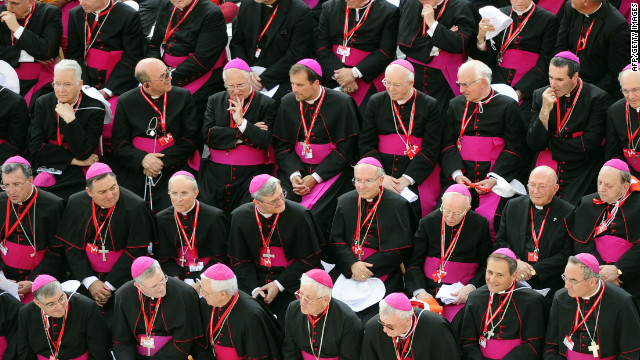
I don’t really want to bash bishops, and I hope that
the criticism I engage in doesn’t really qualify as “bashing”. I agree with the
concept of respect for the episcopal office; I agree that bishops are human
beings, too, and thus not incapable of errors; I agree that obedience to a
bishop’s decrees is required of the faithful.
BUT…okay, there’s
always the big “but”…
Sometimes, it seems
to me, bishops act in highly irregular ways. Yes, we may have a media slant on
the issue at hand, or the bishop may have very good reasons for taking some
particular action, and we may not be privy to all the information he has used
to guide his decision. Still, there are times when you just have to shake your
head…and maybe shake up the community by asking some or making some comments.
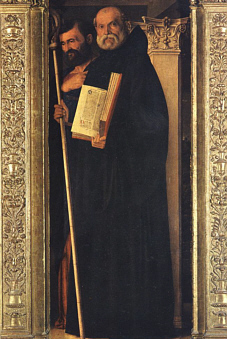 I have heard a story
about a monk who, after years of solitude and prayer in the monastery, left
that haven in order to go out and correct some errors that were running rampant
amongst the laity. The bishop, observing the monk, commented, “What is this?! A
monk has left his monastery!” To which the monk replied, “I wouldn’t have to
leave my cell if you would do your job.”
I have heard a story
about a monk who, after years of solitude and prayer in the monastery, left
that haven in order to go out and correct some errors that were running rampant
amongst the laity. The bishop, observing the monk, commented, “What is this?! A
monk has left his monastery!” To which the monk replied, “I wouldn’t have to
leave my cell if you would do your job.”
Or something like
that. The point is, many bishops are not
doing their job, and by commission or omission, they are misleading the people.
They are causing scandal by allowing people to think, for instance, that it
must be okay for Catholics to disagree with the Church on abortion,
contraception, and homosexual marriage because Catholic politicians do so and
go uncorrected.
Sometimes, the laity must
speak up, even according to Canon Law:
Canon
212 §3 According to the knowledge,
competence, and prestige which they possess, [the faithful] have the right and even at times the duty to
manifest to the sacred pastors their opinion on matters which pertain to the
good of the Church and to make their
opinion known to the rest of the Christian faithful…
What a bishop is
supposed to be, how he is to act: these things are laid out plainly in Canon
Law and in various documents of the Church. For instance:
Walking
in the footsteps of Christ, the Bishop is obedient to the Gospel and the
Church's Tradition; he is able to read the signs of the times and to recognize
the voice of the Holy Spirit in the Petrine ministry and in episcopal
collegiality. (Pastores
Gregis, paragraph 19)
And here’s a little
more from the Code of Canon Law (my emphases):
Canon
386 ß1 The diocesan Bishop is bound to
teach and illustrate to the faithful the truths of faith which are to be believed and applied to morals. He is himself to
preach frequently. He is also to ensure that the provisions of the canons on
the ministry of the word, especially on the homily and catechetical
instruction, are faithfully observed, so that the whole of Christian teaching is transmitted to all.
ß2
By whatever means seem most appropriate,
he is firmly to defend the integrity and
unity of the faith to be believed. However, he is to acknowledge a just
freedom in the further investigation of truths.
Can.
387 Mindful that he is bound to give an
example of holiness, charity, humility and simplicity of life, the diocesan
Bishop is to seek in every way to promote the holiness of Christ's faithful
according to the special vocation of each. Since he is the principal dispenser
of the mysteries of God, he is to strive constantly that Christ's faithful entrusted to his care may grow in grace
through the celebration of the sacraments, and may know and live the paschal
mystery.
These descriptions,
of course, constitute the ideal, and
obviously, many bishops – if not all – fall short of these ideals. They are
human, after all, just like the rest of us! And because of that, we of the
laity are often admonished to be charitable to our bishops (and priests, of
course), to pray for them, and to give them a little slack, because leading the
faithful is such a difficult job.
Is the job of leading the faithful by example really all that hard, though? Well, yes,
there are tightropes to be walked as the media is dealt with, dissident groups
and individuals clamor for changes, and those radical traditionalists keep
insisting on having an extraordinary form of the Mass available on a regular
basis. But then, a bishop is supposed to be a cut above, by the grace of God
through his consecration as a bishop; he’s held to a higher standard than a
parish priest or a layman.
 So, yes, the bishop’s
responsibility is huge: he is responsible for all of those souls under his
care, which includes all of the people of his diocese – even, in a sense, those
who are not Catholic. Many a bishop has probably said to himself, “You can
please some of the people all of the time, and you can please all of the people
some of the time, but you can’t please all of the people all of the time.” And
then he tries to do his best to juggle the needs and desires of his flock as he
makes administrative decisions.
So, yes, the bishop’s
responsibility is huge: he is responsible for all of those souls under his
care, which includes all of the people of his diocese – even, in a sense, those
who are not Catholic. Many a bishop has probably said to himself, “You can
please some of the people all of the time, and you can please all of the people
some of the time, but you can’t please all of the people all of the time.” And
then he tries to do his best to juggle the needs and desires of his flock as he
makes administrative decisions.
And there’s the
problem: a bishop’s job is not really to please
any of the people. A bishop’s job is to please God, and to save souls.
Since the Church
has rules and regs – and since She teaches the Truth – a bishop need only
give voice to what the Church already declares as true. In order to truly care
for his flock, the bishop simply must preach the truth. He must
preach the truth even if he thinks the “big donors” will stop giving money
to the local church. He must preach the truth even if he is
crucified in the media. He must preach the truth even if he is
crucified by his own flock (just like Jesus)!
If the bishop does not
preach the truth (and live it and talk it and publicize it in the mainstream
media), but instead subverts Church teaching and directly violates Canon Law,
then he leads his flock astray. Period.
And if he leads his
flock astray, what is to become of him? Scripture has a straightforward answer:
[Jesus]
said to his disciples, “Things that cause sin will inevitably occur, but woe to
the person through whom they occur. It would be better for him
if a millstone were put around his neck and he be thrown into the sea than for
him to cause one of these little ones to sin. (Luke 17:1-2; see also
Matthew 18:6)
If I were a bishop,
I’d be trembling in fear at those words.
So, is it so
uncharitable to let bishops know that we see errors in their actions? And if
they don’t respond to our concerns privately, is it so uncharitable to let
others know that these errors exist? Dr. Stacy reminds us of that saying that “If
you point a finger, there are three pointing back at you.” She adds (my emphasis):
We
also have the obligation to fulfill our own role in the Church. After all, even
fingers can play a vital role in the functioning of the body, but not if they
are stuck in the eye.
 That’s a good point.
On the other hand (so to speak), sometimes it takes a poke in the eye to get
the bishop’s attention. And better a poke in the eye than eternity in hell.
That’s a good point.
On the other hand (so to speak), sometimes it takes a poke in the eye to get
the bishop’s attention. And better a poke in the eye than eternity in hell.
So what do we do? Do we turn a blind
eye and a deaf ear when bishops say and do scandalous things? Or do we
respectfully, but firmly, announce that “the emperor has no clothes”?
Sometimes, I think, we must accompany our prayer with a poke in the eye.
