Thursday, October 25, 2012

Wednesday, October 24, 2012

Vatican II and a Beer Tent Mass


As we consider these photos (courtesy of The Eponymous Flower) of a “Beer Tent Mass”, let us review a few items from Christus Dominus, Decree Concerning the Pastoral Office of Bishops in the Church (my emphases):


Christus Dominus, Paragraph 2:

Christ gave the Apostles and their successors the command and the power to teach all nations, to hallow men in the truth, and to feed them. Bishops, therefore, have been made true and authentic teachers of the faith, pontiffs, and pastors through the Holy Spirit, who has been given to them.

Christus Dominus, Paragraph 15

…Therefore bishops are the principal dispensers of the mysteries of God, as well as being the governors, promoters, and guardians of the entire liturgical life in the church committed to them.


They should, therefore, constantly exert themselves to have the faithful know and live the paschal mystery more deeply through the Eucharist and thus become a firmly-knit body in the unity of the charity of Christ. "Intent upon prayer and the ministry of the word" (Acts 6:4), they should devote their labor to this end that all those committed to their care may be of one mind in prayer and through the reception of the sacraments may grow in grace and be faithful witnesses to the Lord.
 
As those who lead others to perfection, bishops should be diligent in fostering holiness among their clerics, religious, and laity according to the special vocation of each. They should also be mindful of their obligation to give an example of holiness in charity, humility, and simplicity of life. Let them so hallow the churches entrusted to them that the feeling of the universal Church of Christ may shine forth fully in them...

Tuesday, October 23, 2012

Squelching Latin in the Mass...Even the Novus Ordo!

Another story of the use of Latin in the Mass being unjustly curtailed comes to us from the Dallas, Texas area via Tantamergo’s blog. “St. Mark Latin Mass to be terminated” reads his headline:

…unless attendance increases dramatically, and soon. Within a month or two, I would guess. So we were told by Fr. Hopka last night, repeating the words of Bishop Kevin Farrell, who apparently told Fr. Hopka he was “disappointed” with the attendance at the Latin Mass.

Let’s be clear: this is NOT the TLM. It’s the Novus Ordo said in Latin, for heaven’s sake! It’s not a Sunday Mass; it’s a weekday Mass – a daily Mass said in Latin. Attendance is low? Tantamergo observes that

…if “attendance” is the reason why the Mass is being cancelled, half the daily Masses in the Diocese ought to be cancelled, because they have the same, or fewer people assisting compared with this Novus Ordo Latin Mass (we get about 30-50 a night…)

Wow! In my neck of the woods, that’s an outstanding number of Mass-goers! Daily Mass at the Cathedral gets about 10 on a good day. (The only time I ever saw 30 people at a daily Mass was when, the night before, the pastor had held a meeting and threatened to resign; some blamed his despair on me. Thirty people showed up the next day at Mass to “support” him – and half of them came only to give me dirty looks, from what I could tell.)

Anyway, as Tantamergo notes, the threat of this Mass being terminated is a somewhat pivotal moment for the parish/diocese concerned, because

…if this Mass goes away, the Diocese and any pastor/priest will have a ready-made, 100% plausible excuse never to have Latin Mass again – it was tried and it “failed.”

He’s right – and it will make no difference that the Novus Ordo in general seems to have “failed” in many ways no matter what language is used!

Tantamergo offers a number of reasons why attendance is “low” – reasons I’ve noted before (here, for instance). The cards always seem to be stacked against anything that smacks of “traditionalism”. In the case of St. Mark’s, the factors were:

An odd or inconvenient time (Mondays at 7pm)

Uncertainty as to whether the Mass would actually be said, with many cancellations

Lack of proper “advertising” of the Mass

That last factor is an interesting one. Tantamergo notes (his emphases):

…it was forbidden to list the Latin Mass with the rest of the weekly Masses on the front of the bulletin, or on the front page of the website, for that matter.
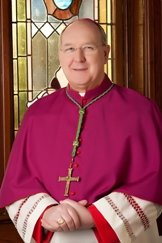
So, why was there little or no advertisement? Why couldn’t this Mass be listed with the other Masses at St. Mark on the bulletin’s front page, or on the website with the other Masses? We had wondered that for a long time. We had asked ushers, called the office, talked to the music minister, all who said it should be on the front page, but never was. We asked specifically for it to be added to the front page, and nothing ever happened. Well, now we know why. It’s because Bishop Farrell himself demanded that it NOT be put on the front page!!!!!!! Apparently, he was very specific about this. So, the prime means of letting people know of the Mass’ ongoing existence was eliminated from the start. I should note that the Mass, from the beginning, was described as “experimental.” Thus, it was perhaps not “worthy” to be listed with the other, “real” Masses.

We ran into something similar here in the far corners of the Diocese of Baker. Our priest was happy to say the EF Mass, and he was happy to have an announcement in the bulletin, but somehow, that just never happened. I don’t know why…not for certain, anyway. I have my suspicions, but let’s not go there. It just didn’t happen.

In addition, we also ran into the problem of a fluctuating time for the Mass. Some weeks it was at 1 pm; sometimes at 3pm; occasionally at noon. That doesn’t work towards building a stable group of attendees!

As Tantamergo notes, there’s a lot of abuse going on in this kind of situation. When a bishop squelches the Latin Mass – whether the Novus Ordo or the Extraordinary Form – it’s pretty obvious that he is setting himself in opposition to the Vatican II document on the liturgy, Sacrosanctum Concilium, which states plainly that “. . .the use of the Latin language is to be preserved in the Latin rites" (SC, #36).

And of course, a bishop who forbids a priest to celebrate Mass in the extraordinary form, is violating the provisions of Summorum Pontificum. Doesn’t a bishop telling a priest that he can’t celebrate even the Novus Ordo in Latin also seem to be an overstepping of bounds?

So here’s the rub, once again: some bishops seem to have one interpretation of the documents of Vatican II, and others seem to have a different take on the issues.  Recall Bishop Anthony Taylor’s derogatory interpretation, especially regarding what the Mass was like before Vatican II.

Don’t you wonder how there can be such different interpretations? And why?

And do you think much will come of a renewed study of the Vatican II documents? I mean, if a bishop has a particular interpretation – say, for example, one that is against the use of Latin in the Mass – then won’t he promote that interpretation? And even if the faithful study the documents and come to a different understanding from their bishop, what good will it do them?  

It seems to me that some of the faithful have been protesting for years that Vatican II did NOT abolish Latin, did NOT turn around the altars, did NOT take away the altar rails, etc. Yet, I don’t think I’ve ever heard a story of a priest or bishop responding, “Oh my gosh! You are RIGHT! We’ll have to re-educate the people, and make some changes right away! We must adhere to the letter of Vatican II!”

Even the Pope doesn’t get that kind of response. Case in point: Redemptionis Sacramentum (On certain matters to be observed or to be avoided regarding the Most Holy Eucharist), which says of itself (my emphases):

This Instruction, prepared by the Congregation for Divine Worship and the Discipline of the Sacraments by mandate of the Supreme Pontiff John Paul II in collaboration with the Congregation for the Doctrine of the Faith, was approved by the same Pontiff on the Solemnity of St. Joseph, 19 March 2004, and he ordered it to be published and to be observed immediately by all concerned.

Yeah. Right. Many of the abuses covered in that document are still going on, as if no one ever read the document!

So…I’m still a little skeptical of any great epiphanies about liturgical correctness resulting from “studying” the documents of Vatican II during the Year of Faith. But who knows? With God, all things are possible.

Monday, October 22, 2012

Bishop Sample: "Crossing the UP"


I have “liked” Bishop Alexander Sample’s Face Book page, and I must say I really do “like” it! This bishop definitely has a vision and a plan, and the energy to implement it.

This last weekend, the Bishop and his entourage made a pilgrimage across the Diocese of Marquette, Michigan. On Friday, October 19, his Face Book status said:

Well, tomorrow (Saturday) we begin the big “kick-off” for the Year of Faith in the Diocese of Marquette as I make the “sign of the Cross” over the entire Upper Peninsula. I will travel over 1140 miles in two days as I place the diocese under the sign of the Cross, the symbol of our faith, in preparation for the New Evangelization. FOLLOW ME ON FACEBOOK AND TWITTER (@BishopSample) as I make this historic pilgrimage. And pray the deer and moose stay away from my car!


On Saturday, the status was:

We have begun our pilgrimage to "cross the U.P." as we kick off this Year of Faith in the Diocese of Marquette. We just left Ishpeming on our way to Copper Harbor to begin the Cross. Fr.. Ben Hasse, a priest of the diocese will be doing most of the posting on my page today. He will sign his posts with FBH. I will occasionally post myself. Guardian Angels, protect us!

And off they went!

All weekend, the pilgrimage went on, as the group made the “sign of the cross” on the U.P. (Upper Peninsula, for those of you who haven’t a clue what those letters might stand for – which was the case for me!)

Now, I’m not at all familiar with the geography of Michigan, and I live some 1800 miles or so from Marquette. But strangely enough, I felt energized and excited about this event as it unfolded on Face Book! 

Along the way, there were little video snippets of the Bishop – some were of him speaking from the passenger seat of the car in which he was traveling, and some were of homilies he gave along the way. It appears that at each major stop, a procession was held.


The name of Bishop Baraga came up often:

L'Anse already: One of Bishop Baraga's first & most important missions!!! One of the inspirations for our journey is Venerable Baraga's practice of planting a cross as he arrived in a new mission. Providential that today is the memorial of St. Paul of the Cross! FBH

Bishop Frederic Baraga, was the first bishop of Marquette. There’s a lot of information at the link about his history and his cause for sainthood. Here’s one paragraph:

Father Baraga arrived in the New World on December 31, 1830. For the next 37 years he traveled the length and breadth of the Great Lakes area to minister to the Ottawa and Chippewa Indians. His first mission (Arbre Croche, 1833-1835) was established along the shore of Lake Michigan at present day Harbor Springs to Cross Village. Fr. Baraga labored two years at Grand River (1833-1835) presently known as Grand Rapids, before moving his mission to LaPointe (1835-1843) and L' Anse (1843-1853) on Lake Superior. During the summer months, Father Baraga traveled on foot and by canoe. During the winter months, he traveled on snowshoes thus giving him the titles of "Apostle of the Lakelands" and "Snowshoe Priest." He wrote long and frequent accounts of his missionary activities including a three-volume diary. He also wrote seven Slovenian prayer books and authored 20 Native American books which includes his monumental Grammar and Dictionary of the Chippewa Language , still in use today. He was the first bishop to write a pastoral letter in both the English and Chippewa languages.

Here are a few of the video clips:


A Glimmer of Hope at Sunday Mass


We went to Mass last night at the little mission church that is not to distant from our house. We love the pastor, who gives meaty homilies, and who is reverent (if not always completely liturgically correct) in his celebration of Mass. The church itself is the one I’ve mentioned where the sanctuary looks like a 1970’s dining room, complete with a “captain’s chair” for the priest and doilies on the end tables. Ugh.

BUT…

This week, at the end of Mass, Father invited everyone to sit down and said he wanted to make some corrections regarding the altar servers.

First, he backtracked and thanked them for be willing to serve. But then he told them that, since he usually closes his eyes during the Our Father, he didn’t know that they were standing with their hands in the “orans” posture. (Under previous pastors, there was actually holding of hands by altar servers and priest as they stood behind the altar.)
This used to be common in our diocese until Bishop Vasa
explicitly taught against it. Now where handholding has
been discontinued, the "orans" posture persists. 

Father made light of the correction by telling the servers that he was going to prepare them to serve in Rome. “If you go to Rome and you are a server,” he said, “and you hold your arms out like that, the people watching on TV will be laughing at you!”

He then instructed them to kneel before the altar during the Our Father, and to wait there to receive Holy Communion – in a kneeling position.

“You will be the example for the people,” he told them. “People are encouraged to kneel for Communion, and I will install a kneeler here for those who want to do that.”

I was ready to applaud! But I refrained.

Still, this gives me hope! Father is a good, solid, fairly orthodox priest who has a sense of what the liturgy should be. He and I have talked about possible changes at this mission church before. He said the EF Mass for us (in a different church) for almost a year, and spoke to me a little bit about how it had changed him. 

We pray for another priest to be assigned to assist Father so that he will be able to return to the celebration of the EF Mass; currently he is spread extremely thin. He is mindful of our needs, though, and I think we will see more changes down the road.

Sunday, October 21, 2012

Claiming Our Inheritance: Fr. Andersen Homily

Here's another homily by Fr. Eric M. Andersen, Sacred Heart-St. Louis in Gervais, Oregon, for October 21st, 2012

Dominica XXIX Per Annum, Anno B

Thus says the Lord through the prophet Isaiah:

“If he gives his life as an offering for sin, he shall see his descendants in a long life, and the will of the Lord shall be accomplished through him.”

This prophecy from Isaiah has been fulfilled by Jesus Christ, who laid down his life as a ransom for many, as an offering for sin. The will of the Lord was accomplished through him. Isaiah speaks of the descendants He shall see if He gives His life as an offering for sin. We are the descendants. Therefore, as descendants, we have an inheritance from Him. But we must claim that inheritance. It is there waiting for us in all its richness, but many do not receive it; either because they do not claim it, or because they reject it. Such was the case of a Parisian man named Felix Leseur, an avowed atheist. But his wife gave her life as an offering to God on his behalf. The will of the Lord was accomplished by her self-offering and Jesus took Felix to Himself in a way that is truly miraculous. Here is the story:

Secret Diary of Elisabeth Leseur
Mr. Felix Leseur was born and raised in France in what he called “a thoroughly Catholic family” (“In Memoriam”. The Secret Diary of ElisabethLeseur. p. xxi). But when he attended medical school he “quickly lost [his] Christian belief” (xxi). He then fell into a life of paganism and atheism. He sought to collect a library of written works by every one of the Church’s adversaries he could find so that he could use them as weapons against Christianity in general and Catholicism in particular. Meanwhile, he married a good and holy woman. Her name was Elisabeth. She had been raised and educated in an affluent Catholic family who practiced their faith in an ordinary way.

At the time of their marriage in 1889, Felix agreed to “respect [his] wife’s faith and to let her practice it freely” (xxii), but he became more and more irritated by her faith and sought to destroy it with all his energy. In his own words, Felix speaks:

I set myself to attack her Faith, and to deprive her of it, and –– may God pardon me! –– I nearly succeeded. During 1897 I managed, by a course of reading and much pressure brought to bear on her, to dissuade her from the practice of her religious duties, seriously to upset her faith, and to lead her in the direction of liberal Protestantism –– which to my mind was only a stage on the way to radical agnosticism. (xxii-xxiii).

Throughout these years, Felix and Elisabeth Leseur led a glittering life in Parisian high society. They travelled and they entertained. Elisabeth gradually abandoned the practice of Catholicism by 1898. Her husband then gave her a heretical book on the Life of Jesus to read which he knew would surely be the nail in the coffin of her faith. But his plan backfired because the book was so poorly written. From the point of view of an atheist, it seemed brilliant, but to Elisabeth, a woman of “sane and steady judgment and uncommon good sense” (xxiii), it proved only to be a cheap deception with a “poverty of substance” (xxiii). Reading the heretical book triggered in her a profound conversion (cf. 288).

So now Elisabeth set out to counterbalance her husband’s Anti-Christian library by collecting and reading the fathers, doctors, and mystics of the Church: St. Jerome, St. Thomas Aquinas, St. Francis de Sales, St. Teresa of Avila, and many more (cf. xxiii). Each day, she also read and meditated upon the New Testament and began to write a spiritual journal.

Then Elisabeth fell ill. She had complications from childhood that affected her liver. Facing her illness, she wrote a spiritual testament and made a pact with God that she would trade her life for the salvation of the soul of her husband. She then came down with breast cancer and after surgery and radiation treatment she went on pilgrimage to Lourdes to give thanks to the Blessed Virgin Mary. Her husband went along so that she would not be unaccompanied. He was impressed with the piety of the crowds, but he did not convert. He was also impressed with how his wife remained so at peace through her many years of illness and suffering. He had long ago ceased to torment her about her faith. He came to respect his wife deeply for her religious devotion, but he himself had no faith.
“One day, she declared with absolute assurance, ‘I shall die before you. And when I am dead, you will be converted; and when you are converted, you will become a religious. You will be Father Leseur.’” A few weeks before her death, she said to him: “You will come and find me again –– I know it” (xli). Elisabeth died in his arms on May 3, 1914, at the age of 47. Felix gazed at the face of his wife who had died and he saw a great peace on her face that seemed extend beyond her death.

One day he discovered her Spiritual Testament that she had left for him to read. This is an excerpt from what she wrote:

This, my beloved husband, is the testament of my soul.

I wish you to be my chief and dearest heir. …Try during your life to discharge, as far as a poor human creature can, my immense debt of gratitude to the adored Father, whom you shall know and love through my prayers in Heaven. When you also shall have become His child, the disciple of Jesus Christ and a living member of His Church, consecrate your existence, transformed by grace, to prayer and the giving of yourself in charity. Be a Christian and an apostle.

And now, my beloved Felix, I tell you once more of my great love. …Close to God, where other dear ones already await us, we shall one day be eternally reunited. I hope for this through my afflictions offered for you and through divine mercy.

Your wife forever, Elisabeth. (143…145)

Felix Leseur then began to read through her journal and little by little, his “former hostility quickly gave way to the wish to know Catholicism” (xli). One year later in the spring of 1915, Felix reconciled with the Church. In 1919, he entered the Dominican Order and in 1923, he was ordained a priest. Fr. Leseur published the spiritual diary of his deceased wife and travelled all over Europe for nearly twenty years speaking about Elisabeth’s apostolate of prayer and accepted suffering. He died in 1950. The cause for her beatification was interrupted by World War II and reopened in Rome in 1990.

Elisabeth Leseur chose to drink from the cup of our Lord’s suffering. She lived out her participation in the common priesthood of the faithful by offering herself to God on behalf of the soul entrusted to her care: her husband, the atheist. By her self-offering, her husband was saved. Jesus Christ saved Felix, but it was through Elisabeth that He did so. We can never give up hope over the conversion of any soul.

For more homilies by Fr. Andersen, click on the tab at the top of the page.

Deacon Pat and a Pagan

My friend Deacon Pat Kearns offers this little video on evangelizing the culture. Deacon Pat loves God, but he's also a true Irishman with a love for beer - and a particular brand of beer at that - as you will see if you watch the video through to the end!


Note: Deacon Pat offers to have a beer with the pagan. However, we're not talking a major, well-publicized fundraiser banquet here, and Deacon Pat doesn't even mention the potential photo op. Neither does the pagan appear to be a well-known public figure who promotes killing babies.

Just sayin...