Sunday, August 26, 2012

Sunday Sunrise

Caeli enarrant gloriam Dei et opera manuum eius annuntiat firmamentum. (Psalm 18:2)


That Pesky "Wives Be Submissive" Reading


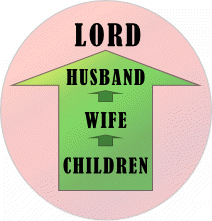
The following is an excerpt from an unpublished manuscript on the three goods of marriage by an author who wishes to remain anonymous; I think he presents a good summary of the primacy of the husband in marriage – the topic of the second reading (Ephesias 5:21-32) in the Novus Ordo Mass for today. It's certainly been my experience that pastors generally prefer to have the "short" version read at Mass - the one that skips over the part about "let wives be subject to their husbands". But everyone who objects to this concept misses the point - so aptly expressed by the priest whose homily I heard last night: "It says 'wives submit to your husbands', but it also says 'husbands, you must be willing to die for your wives and families'!"

Faithful love based on the “order of love”

In Casti Connubii Pope Pius XI stressed that marital love can only be founded upon the “order of love” which he described this way:

“Domestic society being confirmed, therefore, by this bond of love, there should flourish in it that "order of love," as St. Augustine calls it. This order includes both the primacy of the husband with regard to the wife and children, the ready subjection of the wife and her willing obedience, which the Apostle commends in these words: "Let women be subject to their husbands as to the Lord, because the husband is the head of the wife, and Christ is the head of the Church." 

And he quoted his predecessor Pope Leo XIII:

“With great wisdom Our predecessor Leo XIII in the Encyclical on Christian marriage, speaking of this order to be maintained between man and wife, teaches: "The man is the ruler of the family, and the head of the woman; but because she is flesh of his flesh and bone of his bone, let her be subject and obedient to the man, not as a servant but as a companion, so that nothing be lacking of honor or of dignity in the obedience which she pays. Let divine charity be the constant guide of their mutual relations, both in him who rules and in her who obeys, since each bears the image, the one of Christ, the other of the Church." [Arcanum, 1880]

God Himself thought that this topic was so important that He spoke directly to Eve in the Garden of Eden and told her, “Thou shalt be under thy husband's power, and he shall have dominion over thee.” And St. Paul thought this issue so crucial that he discussed it not just in the famous verses from Ephesians already quoted, but also in several other epistles, hardly ever writing a letter without defending the natural order in regard to the proper roles of the sexes. Nor did St. Peter skip over this topic when he wrote in his first epistle,

“In like manner also, let wives be subject to their husbands:  in the incorruptibility of a quiet and a meek spirit which is rich in the sight of God.  For after this manner, the holy women also who trusted in God adorned themselves, being in subjection to their own husbands:  As Sara obeyed Abraham, calling him lord: whose daughters you are, doing well and not fearing any disturbance. Ye husbands, likewise dwelling with them according to knowledge, giving honour to the female as to the weaker vessel and as to the co-heirs of the grace of life: that your prayers be not hindered.” (1 Peter 3:1-7)

Knowing how often this Catholic teaching is denied today, we might wonder why this issue was considered so crucial from Adam and Eve right up until modern times. Our first instinct might be to take a pragmatic view similar to the popular notion which says, “When there is an important decision like buying a car or changing jobs, someone must have the final word, and so the husband has that authority.” This view is summarized by a joke, “My wife decides the small issues and I decide the big issues. So far there haven’t been any big issues.”

But the true reality of marriage is essentially spiritual, not pragmatic. Marriage is our school of sanctification for those of us who have not chosen the higher calling of celibacy. Recall the words of St. Paul to the Ephesians which immediately follow the verses quoted above:

Husbands, love your wives, as Christ also loved the church and delivered himself up for it: That he might sanctify it, cleansing it by the laver of water in the word of life: That he might present it to himself, a glorious church, not having spot or wrinkle or any such thing; but that it should be holy and without blemish. So also ought men to love their wives as their own bodies. (Eph 5:25-29)

Thus the fundamental job of the husband is to sanctify his wife, and lead her to salvation. Just as a pastor has the responsibility for the souls of his parishioners, and he will be held eternally accountable for any culpable negligence that leads to their loss, so the father of a family has responsibility for the smaller number of souls entrusted to his care, and he must lead them to heaven. This is his first and primary duty, and the one upon which his eternal destiny rests, even before such important duties as providing food, shelter, etc.

Every spiritual classic from the saints makes clear that obedience and submission are the very first necessary steps to spiritual growth. So the “order of love” in marriage is not something that comes into play only when there is a major purchasing decision, rather it is the very ground and basis for growth in sanctifying grace. Couples who discard this natural order have eradicated the means established for their own salvation.  As the Imitation of Christ says:

“He who strives to withdraw himself from obedience, withdraws himself from grace. He who does not willingly and freely subject himself to one above him, shows that his flesh does not yet perfectly obey him. Learn quickly to submit yourself to one above you if you wish to bring your own flesh into subjection.”

In addition to these spiritual realities, there are also pragmatic reasons for obedience, primarily in the way in which “the order of love” supports and protects the other two goods of marriage: fruitfulness and permanence. Submission to authority is inherently fruitful, as we see preeminently in the example of the Blessed Virgin. Her humility, her obedience. and her submission were the necessary conditions for her fruitfulness, a fruitfulness which has never been equaled, since she, together with the Holy Spirit, created the God-Man Jesus Christ whose creation is greater than all the rest of the universe. Each individual married woman, although not called to the identical type of fruitfulness as the Blessed Virgin, can imitate her virtues of humility, obedience, and submission, and she will find her virtue similarly rewarded with the blessing of fruitfulness showered upon her by divine Providence.

And just as the humility and submission of Mary were fruitful not only in the physical realm, but primarily in the spiritual, so too each woman who imitates Mary’s virtues will be spiritually fruitful by becoming the model and the mechanism for transmitting these virtues to the next generation. St. Louis de Montfort explains that Mary is the model of Christ and that by casting ourselves in her mold we can more surely and more perfectly be formed to a likeness of Christ, just as a statue is made so much more quickly and easily and a more perfect copy made by pouring the material into a mold than by pounding away with hammer and chisel. In the same way as Mary submitted to Christ and became the mold in which all Christians are formed, so each woman in the limited sphere of her own family can imitate Mary’s role by submitting to her husband and becoming a mold in which her children can be formed in all the virtues, but especially the virtue of obedience, more quickly, more easily, more surely and more perfectly. A woman who is not herself a good model but still hopes to form her children in these virtues is like a sculptor attempting to chisel away at hard and unyielding rock, engaging in difficult and often fruitless labor, instead of using the easier, more certain and more perfect method.

Moreover, a hierarchical relationship of authority and obedience creates the peace, the goodwill and the growth in sanctifying grace that are necessary for the protection of the permanent sacramental marriage bond. In contrast, a relationship of “unnatural equality,” as Pope Pius XI described it, is inherently unstable and prone to dissolution.

As a final word on this topic, let me add a reminder that the symbol of this Catholic doctrine is wearing a headcovering in church. As St. Paul said, “The woman ought to have a sign of authority on her head.” This teaching was handed down and lived by Catholic tradition for more than 1900 years and established by the magisterium as canon law. St. Paul says that any woman who enters church without a head covering “disgraces herself,” and by doing so she makes a public statement of her defiance of the Catholic teaching on authority. A headcovering may be only a symbol, but a very important symbol, one decreed for us by the Word of God and by the tradition and magisterium of the Catholic Church. Every time a woman wears a headcovering in church, she proclaims her fidelity to the traditional Catholic faith, and her commitment to traditional Catholic marriage which will be fruitful, sanctifying and permanent.

Saturday, August 25, 2012

When They Marry Outside the Church

We’ve just gone through an experience that I’m sure many other Catholic grandparents have been through: our granddaughter got married. And she didn’t do it in the Church.

I “just happened” to listen to a sermon on the Audio Sancto website shortly after the engagement was announced. (You can listen to the whole sermon here, and I’ve transcribed part of it below.) Near the end of the homily, the priest says:

And every year at this time of year, the phone rings off the hook, the calls keep pouring in. They go something like this: "Father we just got an invitation to a wedding. My son (daughter, nephew, niece, brother, sister, cousin, God son, God daughter) is a Catholic, but has decided to get married down at the First Church of What's Happening Now. Can we go to the wedding?"

I have to ask: Do they have a dispensation from the bishop?

"No Father."

 Well, I'm sorry to say then, you can't go. See, they've decided to not invite Christ to the wedding. And if they're gonna force you to make a choice, you're gonna have to choose Christ our Lord. They're not getting married, and as Catholics who love our Lord, we don't want to get involved in those kinds of situations...

Parents, tell your children that you love them, but they must obey the Church's marriage laws. And if they ever decide to disobey and force you to take sides, as much as you love them, if they're gonna force you to take sides, you're always gonna side with Christ Our Lord.  

We live quite a distance away, so I wrote our granddaughter a letter to explain that, even under the best of circumstances, I would not be attending the wedding, but also, and more importantly, that she was taking a step that would endanger her soul. I didn’t expect a reply; I just wanted to make sure she knew the gravity of the situation.

I did receive a reply via email, but it was a couple of weeks after the wedding. She told me that she could not have had a Catholic wedding because the young man was not Catholic and that  

the only way that I am “more Catholic”’ than him is that I was baptized in the Catholic church, received my First Holy Communion when I was young, and have gone to confession once, because we had to for CCD.

Cafeteria Catholics?
I shouldn’t have been surprised at what she said. The writing had been on the wall for some time. After all, most of her school years had been spent in a private Christian school – not a Catholic school, but a Protestant one.  She chose not to be confirmed. She also spent a year at a Protestant Bible college.  As for an example from her parents, her father has been a faithful Catholic, always attending Sunday Mass, as far as I know. But for years, her mother attended both Sunday Mass at their local parish as well as a nondenominational Protestant service; her mother also attends a Protestant Bible study and has been involved in the summer vacation bible school of a local Protestant church for a number of years; and her mother had told me a few years previous that she herself was not “a strict Catholic”, and said things that left me feeling sad and wondering how it was that a cradle Catholic could be sucked into Protestantism.  Another of my husband’s sons had married outside the Church, and our granddaughter had participated in that “wedding”.

Hindsight is 20/20, of course.

RE Class
And where was the Church in all this? I think this is a clear example of the failure of the Church to catechize the parents as well as the children. If the parents weren’t properly catechized as they were growing up, then how can they pass the faith on to their children? I imagine that, more and more, Catholic parents in the last 50 years have come to rely on weekly, one-hour “CCD” or “RE” classes to teach their children the faith, all the while sending their children to public school (or even Protestant schools). One hour a week of fluffy RE, combined with Mass attendance on Sunday (if that), will not inoculate the young against the feel-good theology of Protestantism. Catholic schools these days seem to be wanting in the quality of their catechesis as well – sometimes for fear of offending their non-Catholic students (or the parents of these students). Then there is the problem of the  Protestantization of the Mass; and the fact that many Catholic priests are preaching sermons devoid of Catholic identity; and that few Catholics are willing to say, as Michael Voris does, that Protestantism is a heresy…

Sigh.

Our granddaughter also wanted to know:

Since we are equally matched with a love and passion for God, faithful to His command of sexual purity, and regularly attend and enjoy being involved in church, why is our decision to get married outside of the Catholic Church considered a grave sin?

Yes, thank God, they did not live together before marriage, nor surrender their purity. And yet, she seems to have an incomplete understanding of what marriage means. If she’d been married in the Church, she and her fiancĂ© would at least have gone through some pre-marriage classes (though, seriously, I have little confidence in such things these days). I wonder if she would have heard the definition of marriage the FSSP priest gives in his sermon:

[What do we mean by the marriage contract?] A man and a woman give and accept an exclusive and perpetual right for acts which are of themselves suitable for the generation of children. That's the marriage contract; if it's properly made, validly made, then this contract results in a relationship known as marriage. The man and the woman make the contract; if it's properly made, God makes the relationship, which is marriage...

…[T]hey've just been given not only God's permission, but His blessing, His actual blessing at that moment, to use the great creative power. They may use this great power on the condition that the acts are of themselves suitable for the generation of children, so that tells us God's limits on the power, right there. They use it on the condition that these rights are exclusive, which means that each partner uses these rights exclusively to the other partner; that shows the unity of the relationship. And on the condition that each partner yields these rights perpetually, till death do us part. And that shows the indissolubility of the relationship.

…It's important to note this: if the couple did not make a valid contract, then the relationship does not come into being. In other words, they weren't actually married.

The priest goes on to explain about the canonical requirements of marriage:

The canonical form of marriage means that in order to be valid, the marriage must be contracted in the presence of two witnesses and also in the presence of the local bishop or the parish priest, or a priest or a deacon with delegation from the bishop or the parish priest. The basic idea here is, if you're Catholic, the Church requires you to have a Catholic wedding

…See here's the problem. If a Catholic guy and his girlfriend get a wild idea to go to the local justice of the peace or over to the First Church of What's Happenin' Now, and stand up there in front of everybody and exchange vows, it's not valid. That's another way of saying nothing happened. They came in as boyfriend and girlfriend, and they left as boyfriend and girlfriend. They don't actually leave as man and wife. They're not married.

Would she have been taught this kind of thing in a pre-marriage class? Having never attended one myself, I have no idea. And would our granddaughter have been made aware of the wonderful symbolism of the wedding Mass itself? (See my transcription of a homily by this same priest on that subject here).

Does anyone make sure our Catholic kids know this stuff? Well, parents have the first responsibility to make sure this happens, of course. But they’re getting very little help, support, or encouragement from the Church!

And that, dear readers, is why we need to know our faith. That is why we need to pass our faith onto our children first-hand, us to them, not relying on the local parish RE program which may be under the influence of a modernist, liberal, progressive Protestantized RE director. Our Catholic identity is important. It is unique. It is different from a Protestant identity! Our children need to know this, and they need to know it at more than a second-grade level.

And, as parents (and grandparents, and godparents), so do we.

Take to heart these words which I enjoin on you today. Drill them into your children. Speak of them at home and abroad, whether you are busy or at rest. (Deuteronomy 6:6-7)

Click "read more" to see the transcript.

Friday, August 24, 2012

Vortex: Vote for Evil or Less Evil?

Another good Vortex today…watch it, and/or read the whole script here.


Here’s the crux of the issue discussed here (from the script):

Let’s look at this a little more deeply. Faithful Catholics don’t want Obama because he is a conduit for evil – no doubt about it.

But think of this .. if/when a faithful Catholic goes into the voting booth and pulls a lever for Romney – he is pulling the lever for a man who supports same-sex civil unions and has stated that he thinks such couples should be able to adopt.

In short, the dilemma is a guy who supports a heck of a lot of evil, or a guy who supports a little less evil. Man, that’s our choice.

And here’s the root of the problem: Faithful Catholics and under political conservatives have been used and abused by the Republican Party establishment for decades. In five of the last 8 presidential elections, a republican has won.

Abortion on demand is still the law of the land and America has continued her downward moral spiral, granted at varying speeds depending on which party is in control.

But that’s just the point – it boils down to a question of just how fast we are rocketing to hell. Warp speed if the democrats are in charge, cruise control if the Republicans are.
BUT THERE IS NEVER A REVERSAL OF COURSE.

At some point, Catholics and other like-minded moral people, who believe that the number one issue with America is not the economy but moral rot, have got to get out of this box of “vote for the bad guy OR the REALLY bad guy”.


Thursday, August 23, 2012

Modernism, Phenomenology, Personalism...and TOB


I’m not a philosopher…despite the fact that I hold a Doctor of Philosophy degree. I’ve always been attracted to the field of philosophy, but every time I start to delve into it just a little, I remember why I’ve never pursued it. These quotes sum it up nicely:
  
In the eye of healthy sense the philosopher is at best a learned fool. --Bill James

Philosophy: unintelligible answers to insoluble problems. --Henry Brooks Adams

Philosophy is an unusually ingenious attempt to think fallaciously. --Bertrand Russell

Hmmm.

Still, philosophy is important in understanding the Catholic faith. If we don’t keep our eyes open and try to understand a little about the philosophical wars that have gone on in the Church, we’ll be more likely to be distracted by “feel-good” ideas that are born of misinterpretation of the philosophical schools of thought behind them…or sometimes of the philosophical school itself. I think, in fact, this has occurred with some aspects of Blessed John Paul II’s teaching, particularly his Theology of the Body.
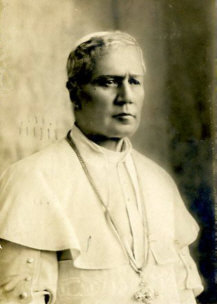
Here’s an important point to keep in mind in this discussion of philosophy: In 1907, Pope Pius X promulgated his encyclical Pascendi Dominici Gregis (“Feeding the Lord’s Flock”) which defined and condemned modernism. The oath against modernism was introduced on September 1, 1910, and was in effect until Pope Paul VI did away with it in 1967. I’m particularly interested in the fifth item of the oath, which required the subject to acknowledge that:

Fifthly, I hold with certainty and sincerely confess that faith is not a blind sentiment of religion welling up from the depths of the subconscious under the impulse of the heart and the motion of a will trained to morality; but faith is a genuine assent of the intellect to truth received by hearing from an external source. By this assent, because of the authority of the supremely truthful God, we believe to be true that which has been revealed and attested to by a personal God, our Creator and Lord.

The reason that paragraph interests me is that it seems to point directly at the philosophies of personalism and phenomenology. To the extent that these two schools of thought emphasize personal experience as that which determines reality, they lead us away from true Catholic thought and teaching, away from “the authority of the supremely truthful God”, as Pope Pius X noted. That can’t be good!

So…let’s talk about modernism, phenomenology, and personalism.  Again, I’m not an expert; I’m speaking from my own cursory reading of articles on the internet, and chapters in a few books I own. That said, as far as I have been able to discern, everyone seems to be in agreement that it is difficult to define these philosophies, because there is no single unifying foundation or theorist for any of them. But usually, we can trace a “Catholic” perspective on each.

Wikipedia says that “Roman Catholic personalism” is (italics in original):

A distinctively Christian personalism developed in the 20th century. Its main theorist was the Polish philosopher Karol Wojtyła (later Pope John Paul II). In his work, Love and Responsibility, first published in 1960, Wojtyła proposed what he termed 'the personalistic norm': "This norm, in its negative aspect, states that the person is the kind of good which does not admit of use and cannot be treated as an object of use and as such the means to an end. In its positive form the personalistic norm confirms this: the person is a good towards which the only proper and adequate attitude is love". This is a first principle of Christian personalism: persons are not to be used, but to be respected and loved. In Gaudium et spes, the Second Vatican Council formulated what has come to be considered the key expression of this personalism: "man....cannot fully find himself except through a sincere gift of himself".

It doesn’t sound too bad, does it? Certainly, the idea of the dignity of the human person is fitting, and soundly Catholic. I think the problem comes, though, when we begin to glorify the human person, and it seems to me that that is a weakness of personalism. Secular personalists, for example, find the ideas of Thomas Aquinas (which Wikipedia calls “Realistic Personal Theism”) “inadequate, for they make finite persons dependent for their existence upon an infinite Person and support this view by an unintelligible doctrine of creatio ex nihilo” (see Wikipedia article).  In other words, they take God out of the picture.

Phenomenology is also multi-faceted. Here’s one general definition:

Phenomenology is the study of structures of consciousness as experienced from the first-person point of view. Literally, phenomenology is the study of “phenomena”: appearances of things, or things as they appear in our experience, or the ways we experience things, thus the meanings things have in our experience. Phenomenology studies conscious experience as experienced from the subjective or first person point of view. 

Pope John Paul II was strongly influenced in his thinking by phenomenologist Max Scheler. Wikipedia says:

Max Scheler
…[Scheler]was a German philosopher known for his work in phenomenology, ethics, and philosophical anthropology. … In 1954, Karol WojtyĹ‚a, later Pope John Paul II, defended his doctoral thesis on "An Evaluation of the Possibility of Constructing a Christian Ethics on the Basis of the System of Max Scheler."

The article gives a general statement of Scheler’s take on phenomenology (italics in original):

…[T]hat which is given in phenomenology "is given only in the seeing and experiencing act itself." …Phenomenology is an engagement of phenomena, while simultaneously a waiting for its self-givenness; it is not a methodical procedure of observation as if its object is stationary. Thus, the particular attitude…of the philosopher is crucial for the disclosure, or seeing, of phenomenological facts. This attitude is fundamentally a moral one, where the strength of philosophical inquiry rests upon the basis of love. Scheler describes the essence of philosophical thinking as "a love-determined movement of the inmost personal self of a finite being toward participation in the essential reality of all possibles."

It’s easy to see the impact on JPII, certainly in the surface terminology of “love” and “self-giving”.  What about on a deeper level? Wikipedia also notes that

A novel aspect of Scheler's ethics is the importance of the "kairos" or call of the hour. Moral rules cannot guide the person to make ethical choices in difficult, existential life-choices. For Scheler, the very capacity to obey rules is rooted in the basic moral tenor of the person. [my emphasis]

Again, I’m no expert in this area. But do you also see, from the above quotes, how much like moral relativism this sounds? The focus is on the individual’s experience, and I imagine there is some value in that viewpoint when you examine it in the context of carefully defined philosophical terms. Still, the emphasis on personal experience – and I understand that these philosophical schools are really much more nuanced and developed than I am portraying here – leads straight down a slippery slope. It seems to me that phenomenology and personalism sort of go hand-in-hand, but the combination of the two leads the untrained lay philosopher into some serious errors of theology, morality, and logic which can be summed up in the one sentence that epitomizes society today: “It’s all about me.”

Taking a look at Pascendi, we find Pope Pius X distinguishing between the Philosopher and the Believer; he tells us that, according to modernism (my emphases throughout):

…it must be observed that, although the Philosopher recognizes as the object of faith the divine reality, still this reality is not to be found but in the heart of the Believer, as being an object of sentiment and affirmation; and therefore confined within the sphere of phenomena; but as to whether it exists outside that sentiment and affirmation is a matter which in no way concerns this Philosopher. [14]

In other words, modernist philosophy says that “reality” is to be found in the heart, and is not concerned with whether that “reality” exists outside the experience of the believer.  We see this percolating down through secular society as the notion that the only thing that matters is “my experience” of whatever “reality” might be under consideration. In fact, I think this is evident in what Pope Pius X says next:

For the Modernist Believer, on the contrary, it is an established and certain fact that the divine reality does really exist in itself and quite independently of the person who believes in it. If you ask on what foundation this assertion of the Believer rests, they answer: In the experience of the individual. On this head the Modernists differ from the Rationalists only to fall into the opinion of the Protestants and pseudo-mystics. [14]

And he concludes that

…How far off we are here from Catholic teaching we have already seen in the decree of the [first] Vatican Council. We shall see later how, with such theories, added to the other errors already mentioned, the way is opened wide for atheism. Here it is well to note at once that, given this doctrine of experience united with the other doctrine of symbolism, every religion, even that of paganism, must be held to be true. What is to prevent such experiences from being met within every religion? In fact that they are to be found is asserted by not a few. And with what right will Modernists deny the truth of an experience affirmed by a follower of Islam? With what right can they claim true experiences for Catholics alone? Indeed Modernists do not deny but actually admit, some confusedly, others in the most open manner, that all religions are true. [14]

So, even if an oath against modernism is no longer required, it still seems to be a path fraught with peril, leading to moral relativism. Modernism, phenomenology, and personalism all seem to be vulnerable to this fatal problem pointed out by Pius X in Pascendi:

In the writings and addresses they seem not infrequently to advocate now one doctrine now another so that one would be disposed to regard them as vague and doubtful…[I]n their books you find some things which might well be expressed by a Catholic, but in the next page you find other things which might have been dictated by a rationalist. When they write history they make no mention of the divinity of Christ, but when they are in the pulpit they profess it clearly; again, when they write history they pay no heed to the Fathers and the Councils, but when they catechize the people, they cite them respectfully…[A]fter having blotted out the old theology, [they] endeavor to introduce a new theology which shall follow the vagaries of their philosophers.

Unfortunately, these words seem to me to be applicable to John Paul II’s Theology of the Body, which was clearly developed in a modernist, phenomenologist, personalist spirit. As Randy Engel puts it,

That the Theology of the Body makes for difficult reading and even more difficult understanding is readily admitted by both proponents and opponents of Wojtyla’s work.

Indeed, a world-wide cottage industry has come into existence, having its sole objective the explanation and popularization of the new theology…[P]erhaps the difficulty…stems from the fact that [TOB writings] are not Catholic, or perhaps it is fairer and more accurate to say that where his writings are original they are not Catholic, and where they are Catholic they are not original.

Seems like a big problem to me.  Stay tuned; more to come…

Wednesday, August 22, 2012

Akin Was Mistaken, But Right, Too


My PhotoI discovered Mother in the Vale blog a while back; author Cindy doesn’t seem to post often, but when she does, it’s well worth reading. She says of her family:

You see, we are something of a freak show with my Protestant extended family… What's so freakish about us?  Well, we are real Catholics.  We are poor. We have 7 children.  We obviously do not use birth control.  I do not work outside the home.  Our family is devoted to Our Blessed Mother.  We have icons all over our house.  We pray the Rosary and make the sign of the Cross often.  We go to confession and we believe that it's possible to control one's sinful behavior. For my Southern Protestant family, we are not to be taken seriously.  We are out of touch with reality.  We are silly.  We are wicked and we need to be saved.

I like her already.

Anyway, she has a great post about Missouri congressman Todd Akin who put his foot in his mouth the other day when he mentioned victims of “legitimate rape”.  Please follow the link and read the whole thing; I'll just give you some tidbits. Cindy says:

Even though he was confused about the biology of how pregnancy works, I understood exactly what Congressman Akin was saying.  He was saying that it is very, very rare for a rape victim to fall pregnant.  And, in the case, that she did, it is morally unjust to murder the child for the crime of his father.  Mr. Akin is right, of course, and the media is using him to hammer into everyone's head the radical feminist agenda. 

That’s what I understood, too. But there’s more, and while I was fumbling around in my mind trying to articulate it, Cindy put her finger right on it, and produced a few links to go along with her point. She says:

Mr. Akin used the term "legitimate rape."  Now any reasonable person knows perfectly well what that means.  In spite of what the media is telling you or what the law defines, there ARE different kinds of rape…
There is rape by force, rape by coercion, marital rape, acquaintance rape, drug induced rape, etc.  They are all crimes, yes, but they carry with them different penalties regarding the circumstances.  Yes, all rape is horrible, but some rapes are worse than others.  

She develops this line of thought a bit, and then tells us what we all really know anyway, but are afraid to say it because it sounds so “uncaring” and “judgmental”. Cindy dares to say:

Women fake rape all the time.  In 2002, a young 17 year-old football player had a bright future.  A class-mate charged him with kidnapping and rape.  He plead non-contest at the advice of his lawyer, served 6 years in jail, and the school system paid the girl $1.5 million.  10 years later, she admitted she lied.  In the spring of this year, a woman in California claimed she had been attacked from behind and sexually assaulted.  She later came forth to tell the police that she had lied about the assault.  Two women in Fort Collins, Colorado accused three men of drugging and raping them in January of this year.  Those two women have since been arrested for lying and extortion.   There is also the story of the young teenager who was charged with raping a friend.  He pleaded guilty on the advice of his lawyer.  After the young man went to prison, his accuser recanted.  It took the Virginia Supreme Court to finally determine that he was falsely accused and improperly counseled, allowing his name to be removed from the sex offender registry. 

These are just a few cases that I could find easily with a Google search.  Who knows how many cases of fake rape women report each year?  The point is, it is not unheard of.  

…So in Mr. Akin's defense, his term "legitimate rape" makes a whole lotta sense to me. 

Me too. Akin apologized, too, in what I thought was a sincere way (see below). Obama should be so forthcoming...

I agree with Cindy’s conclusion:

I applaud Mr. Akin.  He may have missed biology class when the professor was talking about how the female reproductive system works, but at least he has back-bone.  He is right.  Rape is not as clear cut as people would like you to believe.  Some rapes are not "legitimate."  Induced abortion is always morally reprehensible.  There is never an excuse to murder an innocent child, particularly in the case where its execution is for a crime committed by its father. 


Read Cindy's post here.


Tuesday, August 21, 2012

Protestantizing the Faithful


I discovered this notice in a parish bulletin just this last Sunday:

Simulcast with Beth Moore and Travis Cottrell Sept. 15, 2012

Please join us for a day of live music, worship, inspirational teaching by Beth, lunch and fellowship with ladies in our community and from our neighboring towns! Get ready to refresh and recharge spiritually!

Tickets go on sale August 19th at our church office, [and other locations].

You can probably guess just from the little bit of information presented in the bulletin blurb that this is a Catholic speaker!

According to Wikipedia,

[Beth Moore] is an American evangelist, author, and teacher. Moore founded Living Proof Ministries, a Bible-based organization for women, in 1994. It…focuses on aiding women who desire to model their lives on evangelical Christian principles. Travis Cottrell leads worship at these conferences.

So…a local parish is encouraging Catholic women to attend a “simulcast” with a Protestant self-proclaimed “Bible teacher” and listen to contemporary Christian music in order to “recharge spiritually”.

But just try to introduce the Traditional Latin Mass in this parish, or even Gregorian chant in the Novus Ordo Mass…or even the Simple English Propers!

There is just something inherently wrong with this picture.

Is it any wonder our Catholic identity is slip-sliding away?

Before I was received into the Catholic Church, I was a “holy roller” myself (see my conversion story). I was even an officer in the local Aglow chapter. But I knew there was something different about Catholicism. I knew instinctively that if I went to the weekly intercessory prayer meeting and suggested we all pray the Rosary, the idea would not be met with enthusiasm. I resigned my office after deciding to become Catholic, and phased out of the whole Aglow enterprise. It just didn’t match. Now, if I sensed that before I was even in full communion with the Church, and before I even knew there was a GIRM and papal encyclicals and Canon Law…well, why don’t cradle Catholics know it?

Shortly after deciding to become Catholic, I was at a “nondenominational” Bible study. Someone brought up John 6:53, where Jesus says, "Amen, amen, I say to you, unless you eat the flesh of the Son of Man and drink his blood, you do not have life within you” – an quickly added that this was merely “symbolic”. The only other Catholic woman present at the meeting nodded in agreement. I sat there dumbfounded, wondering how she could do that, because that was pretty much the basis on which I was coming into the Church. Oh, I had investigated the Catechism of the Catholic Church to a degree, but I was sold on the Real Presence of Jesus in the Eucharist. That’s why I was becoming Catholic – because I couldn’t receive that Real Presence in the Pentecostal church I was attending.

So…been there, done that. I know that what is taught in Protestant Bible studies does not always reflect Catholic teaching!

And so it continues: the Protestantization of the Catholic Church in Eastern Oregon.